The transformational leadership and the transition from the model to the game idea that we promote at ForeFront Football place the player at the epicenter of our methodology. However, for player autonomy to be real and effective, the coach must confront one of the greatest taboos of traditional football: the treatment of error.
Within a prescriptive game model, error is perceived as a deviation from the plan; an anomaly that must be corrected through repetition and direct correction, distinctive features of levels 1 and 2 of our intervention style scale.
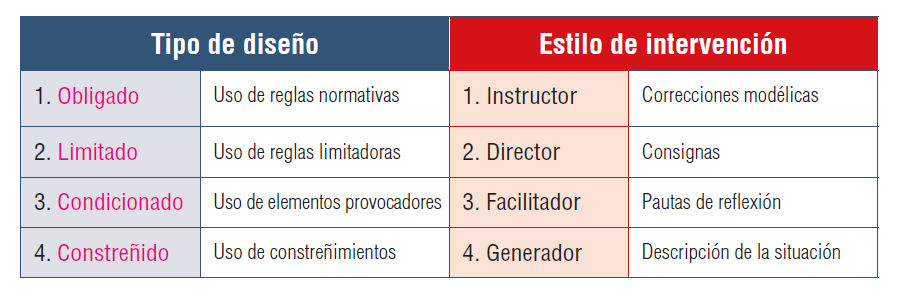
On the contrary, from the paradigm we advocate at ForeFront Football, there is no ideal technical pattern or model capable of resolving the infinity of unpredictable situations that emerge on the pitch. Therefore, our training does not seek the perfection of a specific action, but rather the proposal of diverse game contexts where players must discover how to maintain their efficiency.
In this framework, error ceases to be a failure to meet the coach’s expectations and becomes the difficulty of materializing the intentions of the game idea, even if possession of the ball is maintained. In fact, we replace the concept of error with that of suboptimal behaviors, which can be of various types and origins.
Error as a Driver of Self-Organization
When a player experiences suboptimal behavior, their cognitive system receives immediate feedback from the context. If the coach intervenes intrusively with the classic “don’t do this, do that,” they are interrupting the player’s sensation-action cycle and, with it, their self-analysis and the possibility of learning from what they have done.
“Player optimization is not born from obedience, but from self-organization in the face of uncertainty.”
To promote fluid Positional Play, it is imperative that the player does not fear exploring during practice, as this is the preparatory stage for their adaptation to the changing contexts of the match. If we restrict their exploration—whether through gestures, instructions, or excessive guidance in discovery—we drastically reduce their creativity and their ability to find optimal responses.
It is more appropriate, then, to generate a context where players must act based on organization on the pitch and the collective intentions of the game idea, the two basic organizational references from which the player can act in a way adapted to what is happening.
Toward a New Intervention
If we aspire to proactive and adaptable teams, we must design Preferential Simulating Situations (PSS) where the aforementioned concept of error disappears and is replaced by exploration in favor of player and game optimization. Only through this way of working will we ensure that the player transcends mere execution of orders to become a critical interpreter of the situation.
Ultimately, this is what match day will demand of them: that they make decisions according to what is happening.
This is why, as we mentioned at the beginning, our pedagogical exchange and our game idea, Positional Play, place the true protagonists of this sport at the center: the players.
ForeFront Football