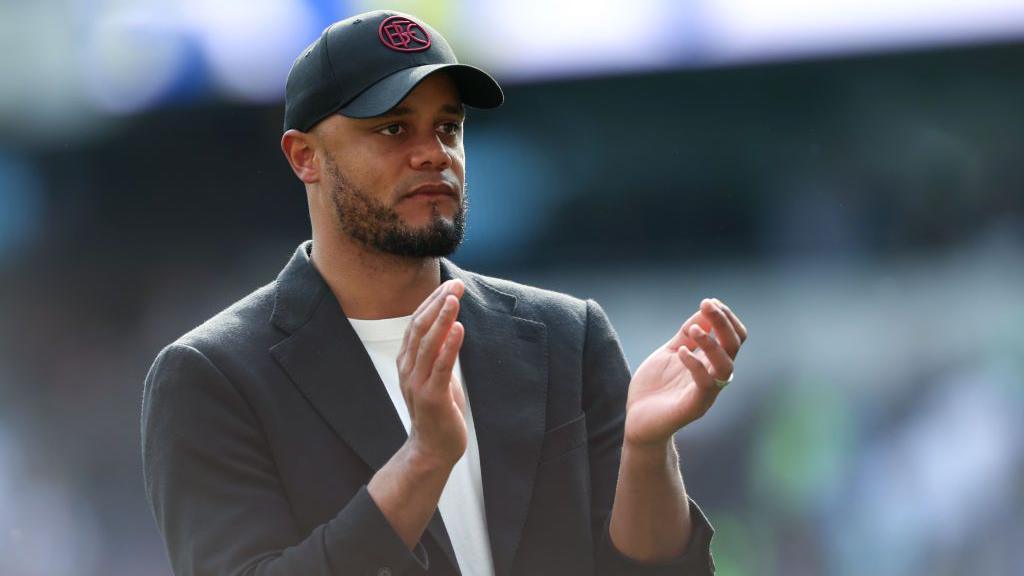
After losing the Champions League semi-final match against PSG, described as one of the best in the history of the competition, Vincent Kompany left a reflection that should be engraved on the tactical boards of any team aspiring to practice, as he does, Positional Play: “There are only two ways: either you go all out on the attack, or you defend with everything. The middle ground does not work against players of this level.” But the answer to the second question is particularly interesting:
– And in the next match, will you do the same?
– Not the same, more, much more.
This statement is not just a declaration of intent; it is the very essence of the survival of a proactive game idea. The best projects can collapse due to the appearance of fear.
Fear as a Switch for the Idea
When the scenario becomes critical, it is common for fear to appear, pushing players (and often coaches) to seek refuge in a “middle ground.” This is not incorrect, as long as this middle ground continues to respect the fundamental alternatives of Positional Play: ball organization and the 3Rs (Redistribution, Relocation, and Recovery).
However, what usually happens is that the middle ground, disguised as a match plan or changes to counteract the opponent, forgets the potential of the team itself and what makes it functional.
As Kompany rightly says, that gray space is a death sentence. In terms of our methodology, game intentions become secondary to counteracting the opponent’s virtues. In one fell swoop, proactivity and the very game identity that characterizes the team are lost.
Not the same, more, much more
When we worked at FC Barcelona with Paco Seirul·lo, he told us that Positional Play had no Plan B. Plan B did not exist. It sounds like suicide. If things don’t work, what are you going to do?
A team is not a machine where, if it doesn’t work, you change a few parts and get a new one that works differently. Game identity is forged over many matches and training sessions, which has led to the establishment of shared intentions by the entire team and staff. This cannot be changed overnight. Adaptations can be made to the game idea according to the opponent’s proposal—which we explain in our Positional Play course—but identity is non-negotiable.
Consistency is not just a respect for what has been done during the season; it is the value that allows a game idea to be built under a specific way of acting.
The Coach’s Role: Setting the Path
A transformational leader, in moments of doubt, does not ask for caution, but for consistency. Kompany’s message reinforces our vision of pedagogical exchange: the player must know that, within our game idea, the only real “error” is paralysis or a lack of conviction in the team’s shared intentions. Being proactive requires absolute determination.
“The only way to be efficient in the long term is by being brave with your own identity.”
Kompany leads the way: the coach must prevent, in moments of tension, doubts resulting from poor results from leading to suboptimal behaviors in the players.
ForeFront Football